Post-CABG you divide circulation between native and graft circulation. In the native circulation, physiology rapidly deteriorates (→ low flow). So we will typically see greater amounts of calcification in native circulation and low flow. This is not a reflection of graft closure, rather it is progression of native disease post-CABG.
⚠️ Be careful about reporting flows post-CABG so that referring doctor is not concerned about low flows and inadvertently sending patient to cath lab. If normal, Bateman will report them. If not normal (especially globally), it is probably best to not report them.
‘Not reported because not clinically relevant.’
Other conditions where reporting flows may not be clinically relevant would be liver failure, renal failure.
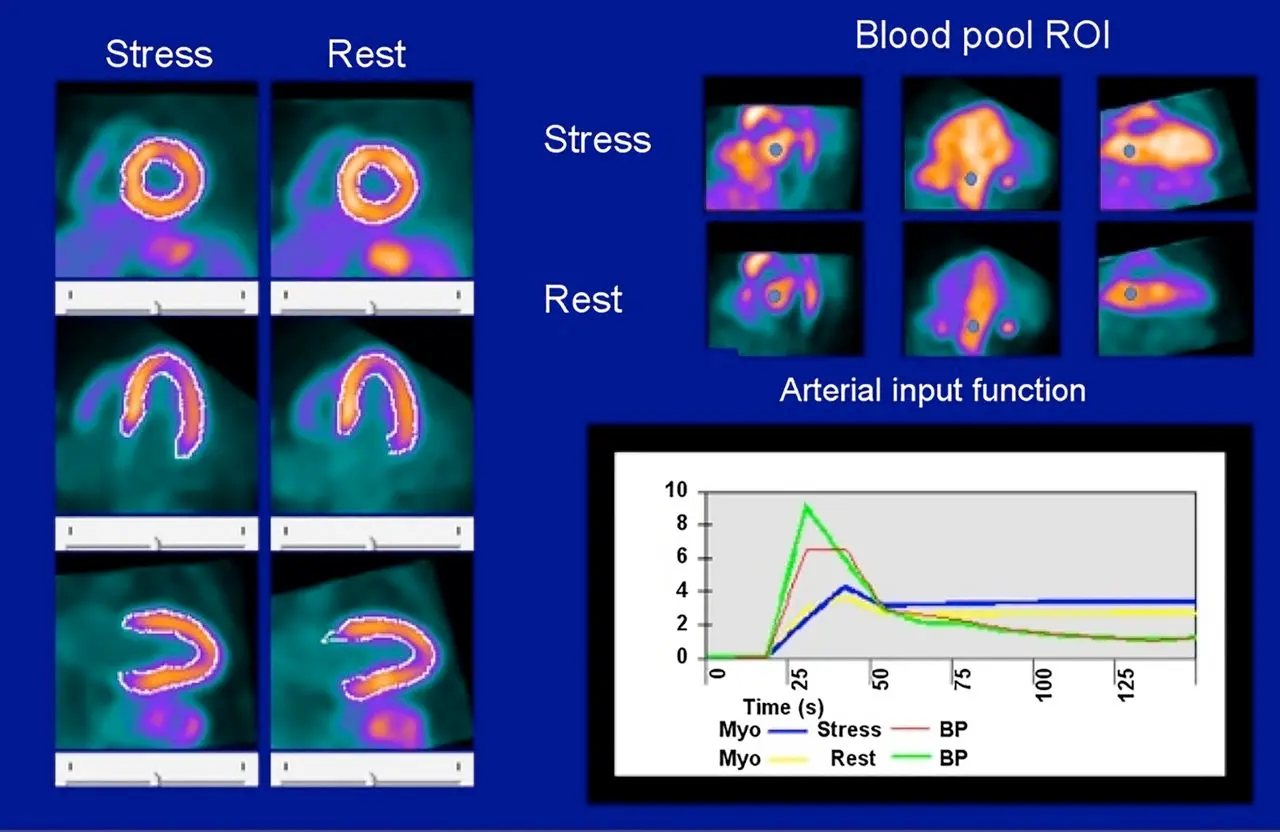
Initially, counts higher in blood pool than myocardium → then flips
So at the peak, the green curve will be highest
In the plateau phase, the signal-to-noise reflects the counts in myocardium (blue) and blood pool (red)
Resting flows can be documented as high if the graph starts at t0 is above 0.
Blood pool is in red.
Generally rest blood pool is 30% higher than peak stress.
If < 30%, then potentially problematic for flow calculation
Compartment models are more sensitive if the QC is problematic.
Quality Control
Slice
On the left and right side of the screen, you can shift the cyan colored lines to intersect your short axis views to make sure you are looking at appropriate cuts to represent apical, mid- and basal views.
Misregistration
Let’s say that the LV is not correctly drawn, you can manually adjust the registration:
In the Slice tab, select the Manual button in the top row
Edit things to your liking
Click Mask and Constrain
Lastly, click the Process button at the top row
QGS
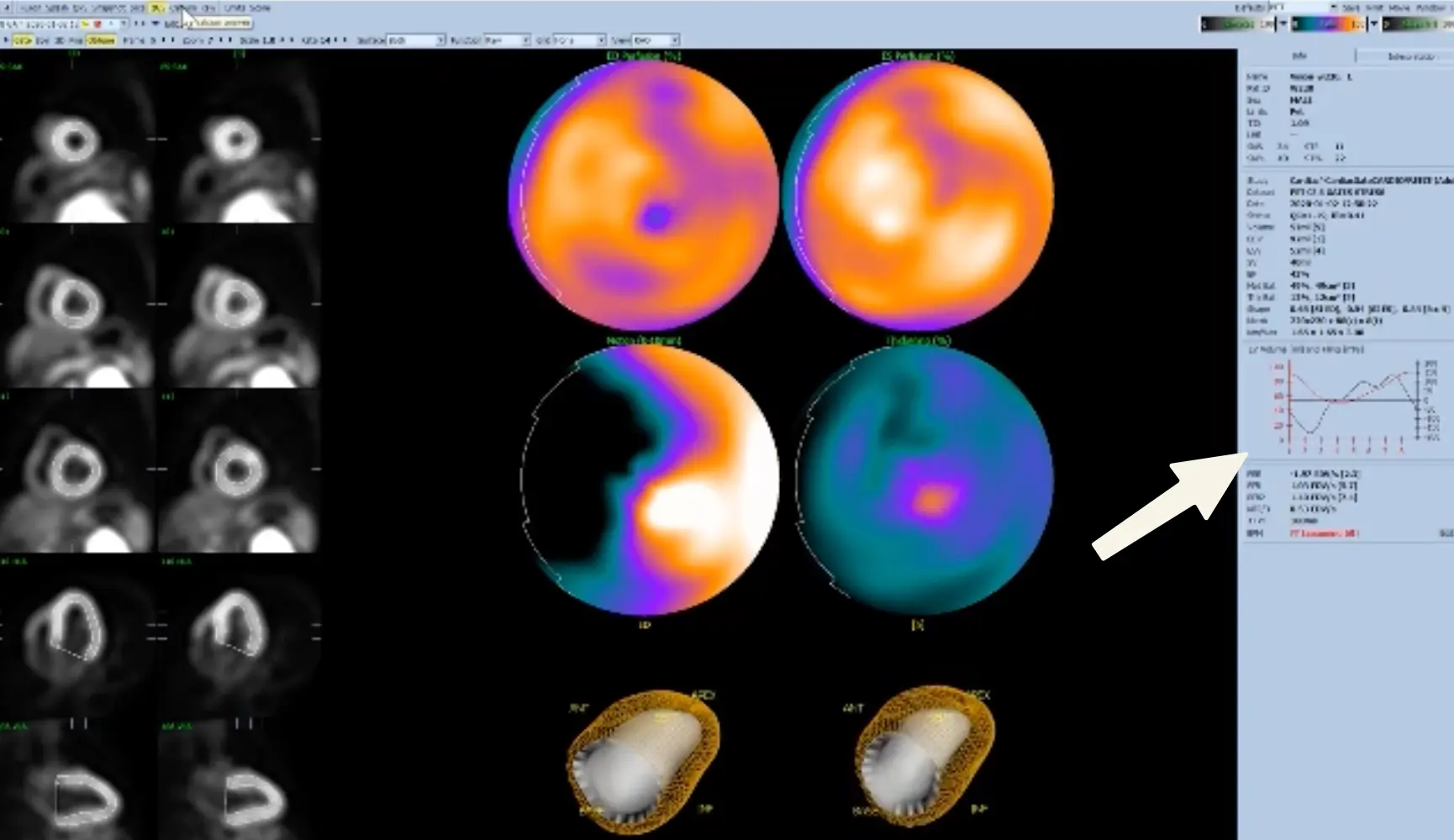
Sanity check for EF estimation
Look at the curve on the right
The red line should be ‘V-shaped’ (makes sense as you go between diastole-systole-diastole).
In reality, I’ve mostly seen it more U- than V-, but the point is that there should be a distinct trough/inflection point.
As you can imagine, AFib can sometimes be finnicky.
⚠️ Data support that EF can be reported a little higher when using 16 vs 8 frames/second.
You may also notice pleural/pericardial effusion and uptake elsewhere, e.g. infection/pneumonia, tumor, etc.
Perfusion pattern
Artifacts
Bouncing heart
Lateral wall motion/Lateral wall hot spot
Diaphragmatic attenuation
Breast attenuation
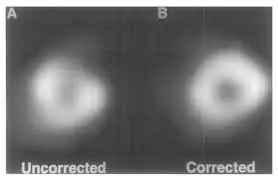
Upward creep - may be seen if a patient hops onto the scanner shortly after exercise. Due to the diaphragm going up and down as the patient is huffing and puffing following exercise.
This is why some protocols will have patient wait ~15 mins post-exercise
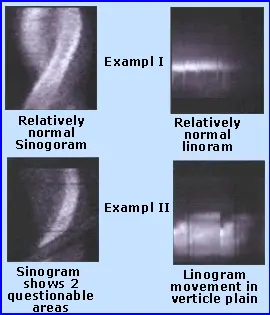
Inspect the sinogram, linogram
“Hurricane sign” is suggestive of motion artifact on SPECT